Sri Lanka holds a long history of performing arts, such as music, dance, and drama. Besides, it owns a wonderful past with regard to the film industry as well. In fact, there are many Sri Lankan films, as well as actors and actresses who have won at the international level. Apart from that, there are many scriptwriters, directors, producers, cameramen, as well as costume designers, and make-up artists who have contributed immensely to the successful long journey of Sri Lankan cinema. When considering all these individuals, it is not unfair to say that Dr. Lester James Peiris is the absolute legend of Sri Lankan cinema. In fact, he has contributed immensely through his work for the entertainment industry of the country. Hence, through this article, we will be focusing on how significant he was and is to the entertainment industry of Sri Lanka.
Who is Dr. Lester James Peiris?
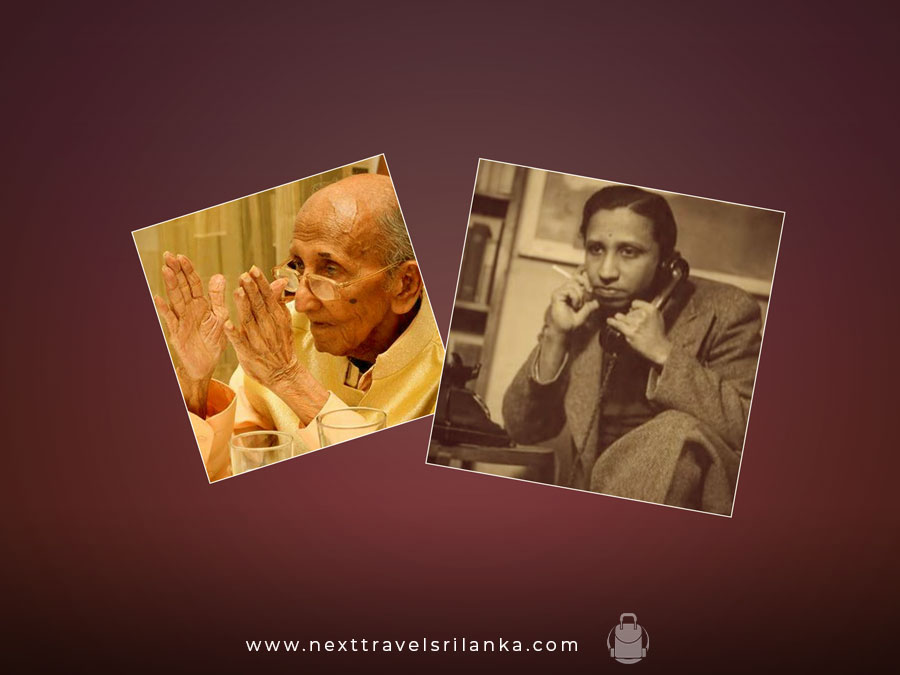
By profession, Dr. Lester James Peiris was a Sri Lankan film director, screenwriter, and film producer. The significance of this wonderful personality is the service he did on behalf of the Sri Lankan film industry, in an era where there were no resources and proper facilities. He is simply the pioneer of the wonderful Sri Lankan cinema that we see today. Hence, Sri Lanka widely regards him as the father of Sri Lankan cinema
The Life of Lester James Peiris in Brief
Dr. Lester James Peiris, who was born on 5th April 1919, hailed from Dehiwala in Colombo. His father, Dr. James Francis Peiris, was a Scottish-trained medical practitioner who was also a cricketer for a Scottish club. And his mother, Ann Gertrude Winifred Jayasuriya, was the first graduate of St. Bridget’s Convent, a leading school in Colombo. However, Peiris grew up in a Roman Catholic family that was Anglicised. Thus, he only spoke English at home while celebrating Christian traditions. Although he had a Sinhala-speaking grandmother, who preferred traditional Sinhalese medicine, he had no link to Sinhala culture. Yet, these factors did not impact him to join and progress in the Sri Lankan film industry.
The Gift that Changed His Life
When he was eleven years old, Lester’s father gifted him an 8mm Kodascope projector, which he used to watch Charlie Chaplin’s silent movies. Peiris and his brother Ivan would also visit the cinema to watch foreign film serials, but he never took part in school drama productions and had no inkling that he would become a film director, mainly because British Ceylon had no national film industry at the time.
Education and Employment
As a teenager, Peiris attended St Peter’s College, Colombo, which was a leading Catholic school. However, he left school at 17 to begin a career in journalism. In fact, he joined the Daily News and began writing for the arts supplement, the “blue pages.” He later worked under Indian editor Frank Moraes at The Times of Ceylon and briefly reviewed books on Radio Ceylon.
Peiris’ first foray into production was with the Drama Circle, a theatre group that produced modern English plays. Although he was not involved in acting, he engaged in all other aspects of the productions.
The Life of Dr. Peiris in England
In 1947, he went to England at the urging of his mother to meet his brother Ivan Peries who was studying art there on a scholarship. Moreas suggested he write a column for the Times about the arts in England, which he did and called “Letter on the Arts from England.”
Around this time, amateur film clubs were becoming popular in the UK with about 400 clubs across the country. Peries became interested in film-making and met Hereward Jansz, another Sri Lankan with a similar passion. Despite Jansz’s doubts about competing with established, well-funded clubs, they decided to make a film together. Peries wrote and directed the script, while Jansz did the filming with their limited camera equipment. Their first short film, ‘Soliloquy’ (1949), won the Mini Cinema Cup for displaying the best technical proficiency. They followed this up with three more experimental films.
Pursuing the Career
In 1952, John Hockin, the editor, offered Peries an interview assignment with the new head of the Government Film Unit of Ceylon. During the interview, the head of the film unit, Mr. Keene, asked about Peries’ interest in making films. Keene was aware of Peries’ talent because he was on the jury that gave Peries an amateur’s award. So, Keene suggested that Peries return to Ceylon to pursue a career in filmmaking.
Upon the return of producer Ralph Keene to Ceylon, Peries joined the Government Film Unit as Keene’s assistant. He helped Keene with two major documentaries, Heritage of Lanka and Nelungama. Peries also directed two documentaries: Conquest in the Dry Zone, about controlling malaria, and Be Safe or Be Sorry – a humorous study on careless drivers.
During this time, a relative suggested that Peries start a company to produce Sinhala films. With this thought, he left the Government Film Unit in 1955 and established Chitra Lanka Limited to produce two films.
Only one, Rekava, was ultimately made. Peries’ closest colleagues at the Government Film Unit, William Blake, a cameraman of Dutch descent, and Titus de Silva (Titus Thotawatte), an editor, resigned with him and later worked together on several films.
Lester, Meeting his Life Partner
In Paris, he met his future wife, Sumitra, at the home of a mutual friend. She was also a film director. The couple married in 1964 at All Saints Church in Borella. They remained together, supporting each other, until the death of Lester, in 2018.
The Work of Dr. Lester James Peiris
Including shorts and documentaries, Dr. Lester James Peiris has been in the business as a filmmaker for about 30 films. His life through his filmography is as follows.
Dr. Lester James Peiris directed a total of 20 films throughout his career. Some of them are as follows.
- “Rekava” in 1956
- “Sandesaya” in 1960
- “Gamperaliya” in 1963
- “Delovak Athara” in 1966
- “Ran Salu” in 1967
- “Golu Hadawatha” in 1968
- “Akkara Paha” in 1969
- “Nidhanaya” in 1972
- “Desa Nisa” in 1972
- “The God King” in 1975
- “Madol Duwa” in 1976
- “Ahasin Polawata” in 1978
- “Veera Puran Appu” in 1979
- “Pinhami” in 1979
- “Baddegama” in 1980
- “Kaliyugaya” in 1982
- “Yuganthaya” in 1983
- “Awaragira” in 1995
- “Wekande Walauwa” in 2002
- “Ammawarune” in 2006
Further, Dr. Lester James Peiris directed a number of short films during his career too. These include:
- “Be Safe or Be Sorry” with a runtime of 16 minutes in 1955
- “Conquest in the Dry Zone” which ran for 14 minutes in 1954
- “Soliloquy” a 12-minute film in 1951
- “Farewell to Childhood” with a runtime of 14 minutes in 1950
- “A Sinhalese Dance” which was 8 minutes long in 1950
Comprehensive Details about the Movies of Dr. Lester James Peries
Scroll down to get an even more comprehensive overview of the films of Dr. Lester James Peiris!
1. Rekava
Dr. Lester James Peries released Rekava – a groundbreaking film in 1956. It was indeed a significant milestone in the history of Sinhala cinema. In fact, it was his first proper film. Besides, it was the first Sinhala film fully shot in Sri Lanka. The film, which translates to “Line of Destiny” in English, is a story about the clash between traditional and modern values in a rural village. It was hailed as a masterpiece of realistic cinema.
Further, Rekava revolutionized Sinhala cinema by introducing new techniques, styles, and themes that had never been seen before. Dr. Peries employed a documentary style of filmmaking that incorporated real-life locations, amateur actors, and natural lighting. This approach was a departure from the conventional style of cinema that relied heavily on sets, professional actors, and artificial lighting.
One of the unique features of Rekava is the use of non-linear storytelling, where the narrative jumps back and forth in time, providing a multi-dimensional view of the characters and their lives. The film explores several themes such as the impact of colonialism, the conflict between tradition and modernity, and the struggle for land rights. These themes were particularly relevant to Sri Lankan society at the time and resonated with audiences.
How Rekava was Helpful for Dr. Peiris to Kickstart His Career
Rekava was a vital milestone for Dr. Lester James Peiris in terms of kickstarting his career to eventually become one of Sri Lanka’s most renowned filmmakers. His success with Rekava paved the way for other Sri Lankan filmmakers to experiment with new styles and themes, creating a new wave of Sinhala cinema.
Further, Rekava had an influence beyond Sri Lanka’s shores. The film was screened at the Cannes Film Festival in 1957, making it the first Sinhala film to be shown at an international film festival. It received critical acclaim and was awarded the Critics’ Prize, which helped to establish Peries as an international filmmaker.
2. Gamperaliya
The movie has been shot entirely outside of a studio and with limited lighting, utilizing only one lamp and hand-held lights. Dr. Peiris directed the movie based on the novel written by the legendary Sri Lankan novelist Martin Wickremesinghe that went by the same title.
Lester James Peries had great admiration for Martin Wickramasinghe’s literary work and got motivated to make a film adaptation of Wickramasinghe’s novel Gamperaliya. Initially, Wickramasinghe was hesitant to allow the adaptation, thinking it would not translate well onto the big screen. However, he eventually gave his approval. Peries enlisted the help of scholar Regi Siriwardena to write the screenplay for the film.
Besides, the film Gamperaliya received international recognition, including the Golden Peacock (Best Film) at the 3rd International Film Festival of India and the Golden Head of Palenque in Mexico. Moreover, at the 1965 Sarasaviya Film Festival, the film was awarded Best Director and Best Film. It was also selected to be part of the 3rd Moscow International Film Festival and was screened at the Cannes Film Festival in May 2008, under the French title Changement au Village, as part of the ‘Restored Classics’ section. This led to the film’s general release in French cinemas. In 2001, the Cinema Thek Institute (CTI) in France recognized the film as a world heritage.
3. Nidhanaya
The film Nidhanaya is based on a short story of the same name which translates to English as ‘The Treasure’. G.B. Senanayake wrote it and it is part of his short story collection ‘Pali Ganeema’ or Revenge. The plot centers around a murder that is committed in order to obtain a hidden treasure.
The Plot of the Movie
The story revolves around Willy Abenayake, a wealthy man from a Sri Lankan village, who has an interest in superstitions. He finds an ancient Ola Leaf manuscript that reveals the location of a treasure in a rock cave that belonged to an ancient king. The manuscript states that he must sacrifice a virgin woman with four black birthmarks on her neck to gain access to the treasure.
One day, he coincidentally comes across a young lady who has four black birthmarks and decides to marry her to fulfill the manuscript’s prophecy. He spends time with his wife, who eventually notices that he is constantly preoccupied with something.
Upon inquiring, he tells her about the religious custom he has to perform at a rock. She agrees to help him with the custom. However, Willy kills his wife as a sacrifice to gain access to the treasure but is unable to find it. He returns home, writes the story in his diary, and then commits suicide by hanging himself.
Recognition for the Movie
The creation of the movie Nidhanaya is an exceptional work of Dr. Lester James Peiris. It was a masterpiece that could take the identity of Sri Lanka to the world. And even as a movie, it had very high standards.
The movie received the Silver Lion of St. Mark award at the 1972 Venice International Film Festival, as well as a Diploma for being one of the outstanding films of the year at the London Film Festival. It also became the best film in the first 50 years of Sri Lankan cinema. Moreover, it was among the top 100 films of the century, announced by the Cinémathèque Française.
Awards Won by Dr. Peiris
Dr. Lester James Peiris, the renowned Sri Lankan film director, received several awards and honors throughout his illustrious career.
UNESCO awarded him the “Fellini Gold Medal” for his exceptional film career at the Cannes International Film Festival in 2003. Moreover, the Sri Lankan government bestowed upon him the highest civil honor of Sri Lanka, “Sri Lankabhimanya” in 2007.
He also won the Lifetime Achievement Award at the 31st International Film Festival of India in 2000. Before that, in 1997, the French government awarded him the title of “Commandeur” in the Ordre des Arts et des Lettres (Order of Arts and Letters).
In addition, he also won several international awards for his films. Notably, his short films “Soliloquy” and “Farewell to Childhood” won the Mini Cinema Cup and the Amateur Cine World Silver Plaque, respectively, in Great Britain in 1951 and 1950. The Institute of Amateur and Experimental Film Makers Festival in Great Britain also recognized “Conquest in the Dry Zone” with a Diploma of Honour at the Venice Film Festival in 1954.
In recognition of his contributions to the Sri Lankan film industry, the Department of Posts in Sri Lanka dedicated him a National Stamp, appreciating his contributions to the Sri Lankan cinema industry. It happened on April 5, 2002.
Further, a hybrid orchid was named after him on March 11, 2004, known as Ascocenda Lester Peries. Besides, the government declared April 5th as “National Artist Day” honoring him.
The Bottom Line
After all, this article focused on the life, work, and legacy of the absolute legend of Sri Lankan cinema Dr. Lester James Peiris. He is undoubtedly a prominent personality who could make Sri Lanka’s name famous. Through studying his movies, viewers can get a great understanding of the lifestyle of Sri Lankans sometime in the 20th century. Of course, they are tremendous portrayals of Sri Lanka’s culture. Nevertheless, the work Dr. Peiris has done for the cinema industry of Sri Lanka is incomparable. So, why not? Try to watch some of his films if you are able to find any!